Ocean Life Returns to Scottish Waters
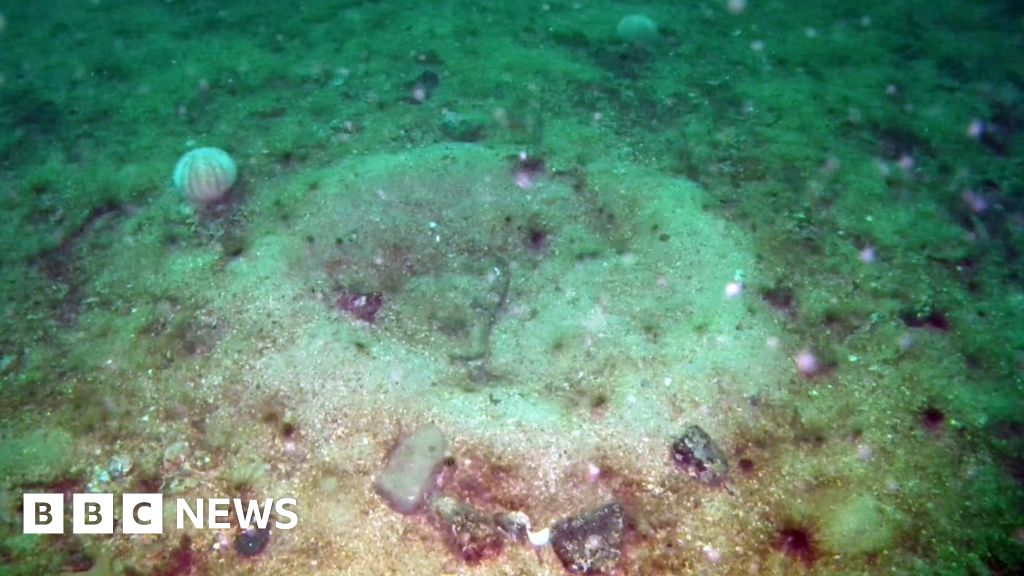
A protected sea area in Scotland is slowly recovering from illegal fishing. In 2019, a boat damaged the seabed near Eilean Dubh island. Now, scientists are using a drone camera to check the water. They can see crabs and sea cucumbers on the sand. Activists want the government to protect more of the sea soon.
A special sea area in Scotland is showing good signs of recovery. In the past, illegal fishing boats damaged the ocean floor here. This area is the Wester Ross Marine Protected Area. It covers about six hundred square kilometers of inland waters. Glaciers shaped this beautiful sea floor after the last ice age. The seabed has flame shells and a pink seaweed. People call this beautiful pink seaweed by the name maerl. These plants and shells protect sea cucumbers, scallops, and sea urchins. In 2019, a fishing boat illegally dragged heavy gear here. The boat wanted to catch scallops from the mud. This dredging destroyed the marine environment near Eilean Dubh island. Divers went under the water and saw the terrible damage. Now, scientists use a small underwater drone to check the area. The drone has a camera to look at the seabed. The scientists are very happy because some life is returning. They saw crabs, cat sharks, and cushion sea stars. They also found many sea cucumbers on the sand. But the complex ecosystem needs a long time to return. A conservation group named Open Seas monitored this damaged site. The group wants to protect the Scottish coastal waters. Phil Taylor is the director of this conservation group. He wants to protect the cod fish here. In the past, cod were very common in this place. Now, cod fish are rare because of heavy fishing. On Tuesday, activists will walk to the Scottish parliament. More than sixteen thousand people signed this new petition. They want the government to ban dredging in more areas. They believe the government is too slow to help. The government says it takes marine protection very seriously.
Take a position. Out loud, if you can.
Four ways to start. Pick one and try saying it before you scroll on.
Tip · Record yourself, use in a notebook, or practice with a language partner.
How big is the Wester Ross Marine Protected Area?
Past simple for completed actions
Use the past simple tense to describe actions that started and finished in the past.
“Divers went under the water and saw the terrible damage.”
What to know · A2
Try saying this aloud
Scenario: Discussing an animal or a pet with a friend.
- 01“I saw a cool animal.”
- 02“It likes to hide.”
- 03“We should take care of it.”
Register tip · informal
🔑Key Phrases
This is a common phrase to describe healing or improvement in nature or health.
The sick dog is showing good signs of recovery.
Use this to describe activities related to exploring the ocean.
The divers went under the water to find the ship.
Use this to express a strong commitment to environmental issues.
Our school takes student safety very seriously.
🎙️ Article Audio — Kokoro TTS
Ocean Life Returns to Scottish Waters
💬Discussion Questions
Open-ended questions to talk or write about — alone, with a partner, or in class.
- 1
What are the differences between a protected park and a normal park?
Compare - 2
Why do you think some people fish in illegal areas?
Opinion - 3
How will marine life change if we protect more coastal waters?
Predict - 4
When did you last see a wild animal in its home?
Personal - 5
Is using a drone better than sending human divers into water?
Compare - 6
How can we teach children to respect the sea and rivers?
Opinion - 7
Which is more important, cheap food or a clean sea floor?
Evaluate - 8
What would you say to the government about protecting local forests?
Opinion
Adapted from BBC Science · Read the original. LinguaPress rewrites the facts as original graded-reader text for language learners.


Advertisement